Tracefront
← Map
BattlefieldApproximate location

Caen

Calvados, FR

0 artifacts90 photographsSubmitted by Admin

Photographs (90)

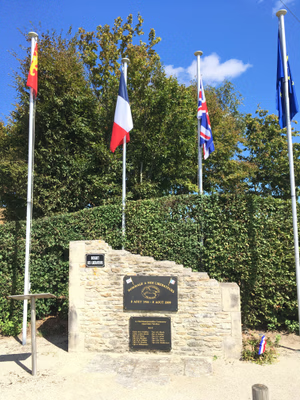
Memorial commemorating the Northamptonshire Yeomanry who liberated Saint-Aignan de Cramesnil during the operation Totalize on 8th August 1944
Memorial commemorating the Northamptonshire Yeomanry who liberated Saint-Aignan de Cramesnil during the operation Totalize on 8th August 1944

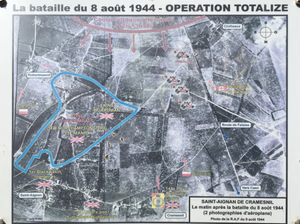
Aerial photograph depicting the battle around Saint-Aignan de Cramesnil in the morning of the 8th August 1944
Aerial photograph depicting the battle around Saint-Aignan de Cramesnil in the morning of the 8th August 1944

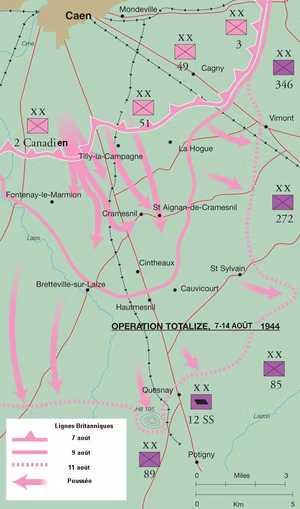
Poussée Alliée lors de l'Opération Totalize du 7 au 14 août 1944 pour déloger les Allemands de Falaise en Normandie.
Poussée Alliée lors de l'Opération Totalize du 7 au 14 août 1944 pour déloger les Allemands de Falaise en Normandie.

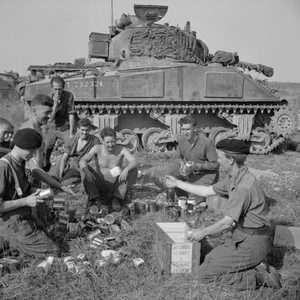
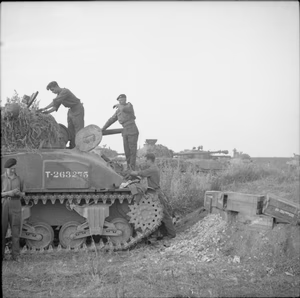
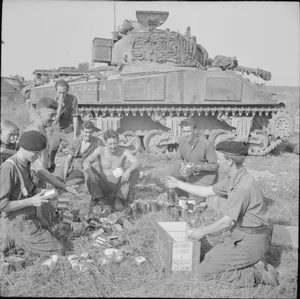
The crew of a Sherman tank of 1st Northamptonshire Yeomanry receive rations before the start of Operation 'Totalise' ,
The crew of a Sherman tank of 1st Northamptonshire Yeomanry receive rations before the start of Operation 'Totalise' ,

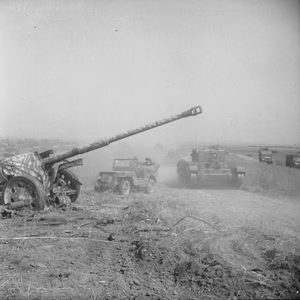
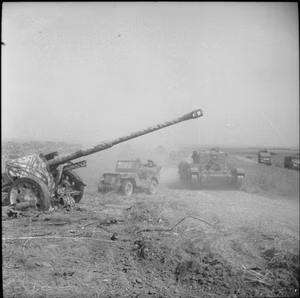
A Cromwell tank and jeep pass an abandoned German PAK 43/41 gun during Operation 'Totalise' .
A Cromwell tank and jeep pass an abandoned German PAK 43/41 gun during Operation 'Totalise' .

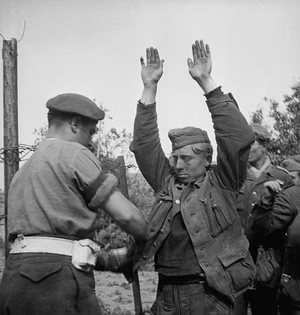
Canadian troops searching German prisoners captured during the early stages of Operation Totalize, Tilly-la-Campagne, France (vicinity) Source: Library and Archives Canada USE/REPRODUCTION: Restrictions on use/reproduction: Nil Copyright: Expired Credit: Harold G. Aikman / Canada. Dept. of National Defence / Library and Archives Canada / PA-162000
Canadian troops searching German prisoners captured during the early stages of Operation Totalize, Tilly-la-Campagne, France (vicinity) Source: Library and Archives Canada USE/REPRODUCTION: Restrictions on use/reproduction: Nil Copyright: Expired Credit: Harold G. Aikman / Canada. Dept. of National Defence / Library and Archives Canada / PA-162000

The British Army in Normandy 1944 Sherman tank crews preparing for Operation 'Totalise', 7 August 1944.
The British Army in Normandy 1944 Sherman tank crews preparing for Operation 'Totalise', 7 August 1944.

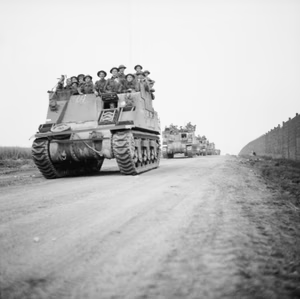
The British Army in Normandy 1944 Infantry are carried forward in Priest carriers on the eve of Operation 'Totalise', 7 August 1944.
The British Army in Normandy 1944 Infantry are carried forward in Priest carriers on the eve of Operation 'Totalise', 7 August 1944.

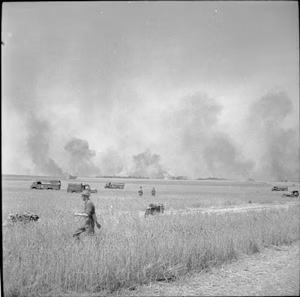
The British Army in Normandy 1944 Smoke rises in the distance after a raid on German positions at the start of Operation 'Totalise', 8 August 1944.
The British Army in Normandy 1944 Smoke rises in the distance after a raid on German positions at the start of Operation 'Totalise', 8 August 1944.

The British Army in the Normandy Campaign 1944 A Cromwell tank and jeep pass an abandoned German 88mm anti-tank gun during Operation 'Totalise', 8 August 1944.
The British Army in the Normandy Campaign 1944 A Cromwell tank and jeep pass an abandoned German 88mm anti-tank gun during Operation 'Totalise', 8 August 1944.

The British Army in the Normandy Campaign 1944 The crew of a Sherman tank of 1st Northamptonshire Yeomanry receive rations before the start of Operation 'Totalise', 7 August 1944.
The British Army in the Normandy Campaign 1944 The crew of a Sherman tank of 1st Northamptonshire Yeomanry receive rations before the start of Operation 'Totalise', 7 August 1944.

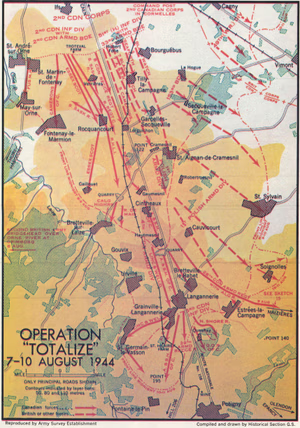
Colour tactical map of Allied advance south from Caen during Operation Totalize, 7–10 August 1944.
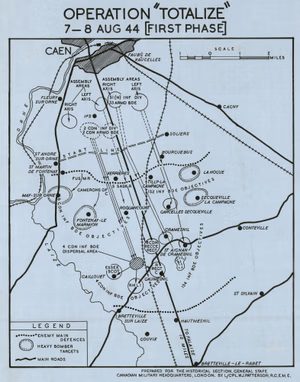
Colour tactical map of Allied advance south from Caen during Operation Totalize, 7–10 August 1944.

Map of the Canadian Corps’ advance south of Caen during Operation Totalize, 7–8 August 1944.
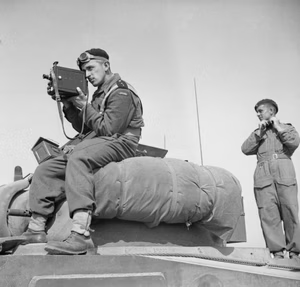
Map of the Canadian Corps’ advance south of Caen during Operation Totalize, 7–8 August 1944.

The 1st Polish Armoured Division in the Normandy Campaign 1944 Cameramen in uniform: 2nd Lieutenant Jerzy Januszajtis, a Polish Army Film Unit cameraman, films from the top of a Sherman tank of the 1st Polish Armoured Division tank during Operation 'Totalise', south of Caen, Normandy on 8 August 1944. He is using a De Vry camera fitted with a sling.
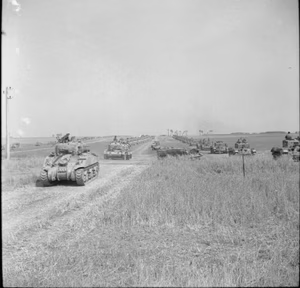
The 1st Polish Armoured Division in the Normandy Campaign 1944 Cameramen in uniform: 2nd Lieutenant Jerzy Januszajtis, a Polish Army Film Unit cameraman, films from the top of a Sherman tank of the 1st Polish Armoured Division tank during Operation 'Totalise', south of Caen, Normandy on 8 August 1944. He is using a De Vry camera fitted with a sling.

The 1st Polish Armoured Division in the Normandy Campaign 1944 Sherman and Cromwell tanks of the 1st Polish Armoured Division on the move at the start of Operation 'Totalise'.
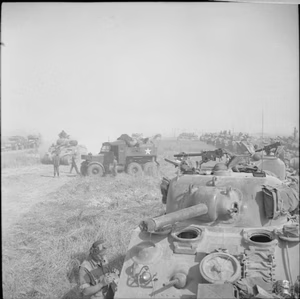
The 1st Polish Armoured Division in the Normandy Campaign 1944 Sherman and Cromwell tanks of the 1st Polish Armoured Division on the move at the start of Operation 'Totalise'.

The 1st Polish Armoured Division in the Normandy Campaign 1944 Sherman tanks of the 1st Polish Armoured Division in line at the start of Operation 'Totalise'.
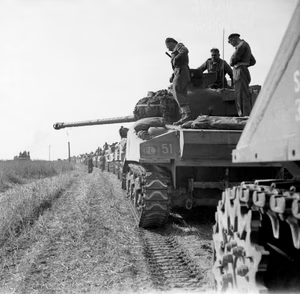
The 1st Polish Armoured Division in the Normandy Campaign 1944 Sherman tanks of the 1st Polish Armoured Division in line at the start of Operation 'Totalise'.

The 1st Polish Armoured Division in the Normandy Campaign 1944 Sherman tanks of 1st Polish Armoured Division at the start of Operation 'Totalise'.
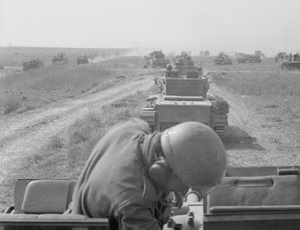
The 1st Polish Armoured Division in the Normandy Campaign 1944 Sherman tanks of 1st Polish Armoured Division at the start of Operation 'Totalise'.

The 1st Polish Armoured Division in the Normandy Campaign 1944 Column of Cromwell and Sherman tanks of the 1st Polish Armoured Division moving towards enemy positions during the Battle of Falaise Pocket.
The 1st Polish Armoured Division in the Normandy Campaign 1944 Column of Cromwell and Sherman tanks of the 1st Polish Armoured Division moving towards enemy positions during the Battle of Falaise Pocket.

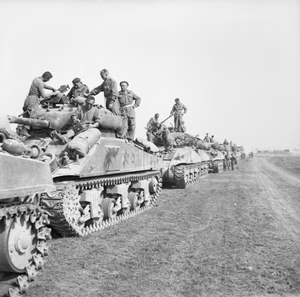
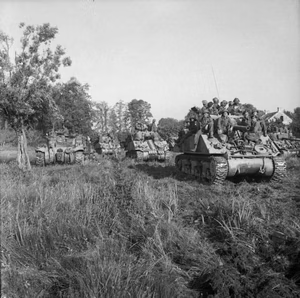
Sherman tanks of 1st Polish Armoured Division assembled for Operation 'Totalise', Normandy, 8 August 1944. Sherman tanks of the 1st Polish Armoured Division assembled for Operation 'Totalise', 8 August 1944.
Sherman tanks of 1st Polish Armoured Division assembled for Operation 'Totalise', Normandy, 8 August 1944. Sherman tanks of the 1st Polish Armoured Division assembled for Operation 'Totalise', 8 August 1944.

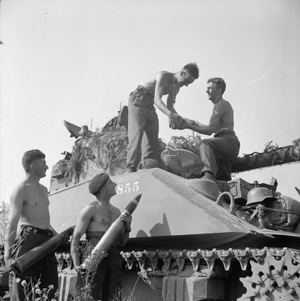
A Sherman Firefly crew of 1st Northamptonshire Yeomanry load ammunition for the 17-pounder gun into their vehicle before the start of Operation 'Totalise' .
A Sherman Firefly crew of 1st Northamptonshire Yeomanry load ammunition for the 17-pounder gun into their vehicle before the start of Operation 'Totalise' .

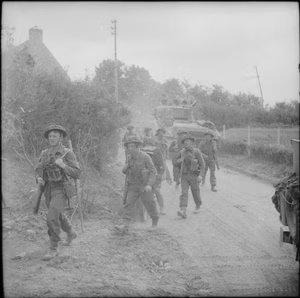
The British Army in the Normandy Campaign 1944 Infantry moving up during attacks between Hill 112 and Hill 113 in the Odon valley, 16 July 1944.
The British Army in the Normandy Campaign 1944 Infantry moving up during attacks between Hill 112 and Hill 113 in the Odon valley, 16 July 1944.

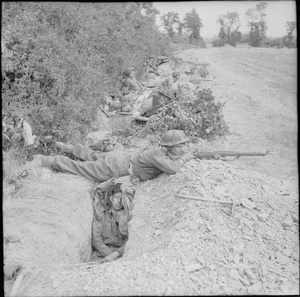
The British Army in the Normandy Campaign 1944 Infantry occupy slit trenches in the forward area between Hill 112 and Hill 113 in the Odon valley, 16 July 1944.
The British Army in the Normandy Campaign 1944 Infantry occupy slit trenches in the forward area between Hill 112 and Hill 113 in the Odon valley, 16 July 1944.

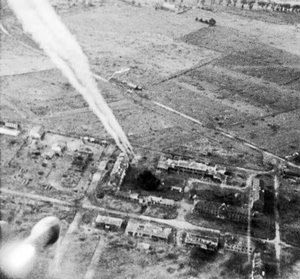
A rocket fired from a Typhoon of No 181 Squadron, Royal Air Force , on its way towards buildings at Carpiquet airfield during the battle for Normandy. The Canadian 3rd Division took Carpiquet to the west of Caen on 4 July.
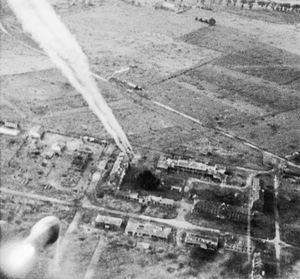
A rocket fired from a Typhoon of No 181 Squadron, Royal Air Force , on its way towards buildings at Carpiquet airfield during the battle for Normandy. The Canadian 3rd Division took Carpiquet to the west of Caen on 4 July.

The Allied Campaign in North-west Europe, 6 June 1944 - 7 May 1945 The Battle for Normandy: A rocket fired from a Typhoon of No 181 Squadron, Royal Air Force, on its way towards buildings at Carpiquet airfield. The Canadian 3rd Division took Carpiquet to the west of Caen on 4 July.
The Allied Campaign in North-west Europe, 6 June 1944 - 7 May 1945 The Battle for Normandy: A rocket fired from a Typhoon of No 181 Squadron, Royal Air Force, on its way towards buildings at Carpiquet airfield. The Canadian 3rd Division took Carpiquet to the west of Caen on 4 July.

The Orne River Bridge near Caen, a vital bridge which was held by glider troops until the main body of invasion forces were able to reach them.
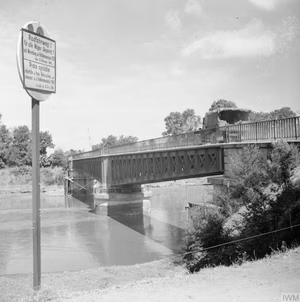
The Orne River Bridge near Caen, a vital bridge which was held by glider troops until the main body of invasion forces were able to reach them.

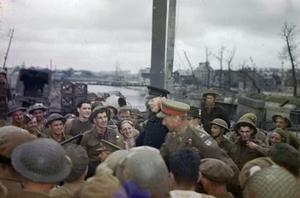
Winston Churchill Visits Normandy, July 1944 Prime Minister Winston Churchill and General Sir Bernard Montgomery gather with troops in Caen on 22 July 1944 who took part in the D-Day landings.
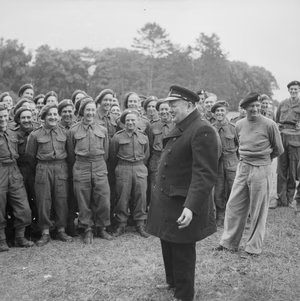
Winston Churchill Visits Normandy, July 1944 Prime Minister Winston Churchill and General Sir Bernard Montgomery gather with troops in Caen on 22 July 1944 who took part in the D-Day landings.

The British Army on the Caen Front in Normandy, July 1944 The scene in the gun pit of a 155mm gun of 53 Heavy Regiment, Royal Artillery during the barrage. The 155mm was an American gun often manned by British troops on the Normandy front.
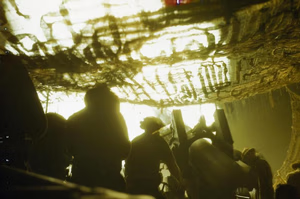
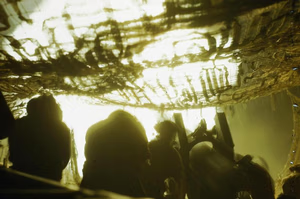
The British Army on the Caen Front in Normandy, July 1944 The scene in the gun pit of a 155mm gun of 53 Heavy Regiment, Royal Artillery during the barrage. The 155mm was an American gun often manned by British troops on the Normandy front.
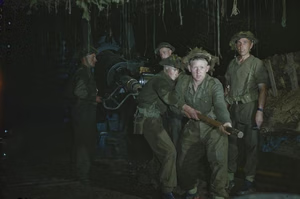
The British Army on the Caen Front in Normandy, July 1944 The scene in the gun pit of a 155mm gun of 53 Heavy Regiment, Royal Artillery during the barrage. The 155mm was an American gun often manned by British troops on the Normandy front.

The British Army on the Caen Front in Normandy, July 1944 The scene in the gun pit of a 155mm gun of 53 Heavy Regiment, Royal Artillery during the barrage. The 155mm was an American gun often manned by British troops on the Normandy front.

The British Army in the Normandy Campaign 1944 British troops pass the Hotel Restaurant Gondree at Benouville, near 'Pegasus Bridge' over the Caen Canal, 9 June 1944.
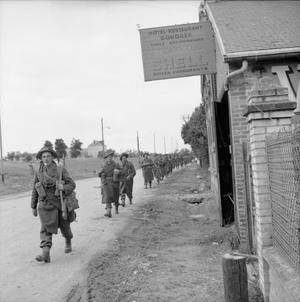
The British Army in the Normandy Campaign 1944 British troops pass the Hotel Restaurant Gondree at Benouville, near 'Pegasus Bridge' over the Caen Canal, 9 June 1944.

The British Army in Normandy 1944 General Montgomery stops his car to chat to troops during a tour of 1st Corps area near Caen, 11 July 1944.
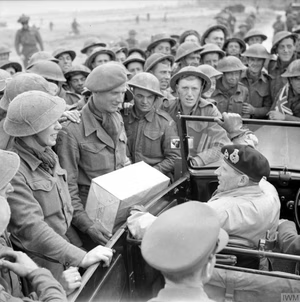
The British Army in Normandy 1944 General Montgomery stops his car to chat to troops during a tour of 1st Corps area near Caen, 11 July 1944.

The British Army on the Caen Front in Normandy, July 1944 A gun crew of 53 Heavy Regiment, Royal Artillery loading a 155mm gun under camouflage netting. The 155mm gun was an American gun, often manned by British troops on the Normandy front.
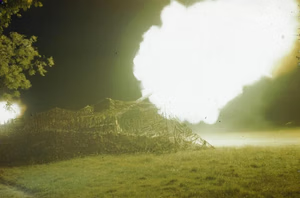
The British Army on the Caen Front in Normandy, July 1944 A gun crew of 53 Heavy Regiment, Royal Artillery loading a 155mm gun under camouflage netting. The 155mm gun was an American gun, often manned by British troops on the Normandy front.

The British Army on the Caen Front in Normandy, July 1944 A camouflaged 155mm gun of 53 Heavy Regiment, Royal Artillery firing during the barrage. The 155mm was an American gun often manned by British troops on the Normandy front.
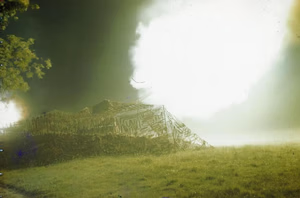
The British Army on the Caen Front in Normandy, July 1944 A camouflaged 155mm gun of 53 Heavy Regiment, Royal Artillery firing during the barrage. The 155mm was an American gun often manned by British troops on the Normandy front.
The British Army on the Caen Front in Normandy, July 1944 A camouflaged 155mm gun of 53 Heavy Regiment, Royal Artillery firing during the barrage. The 155mm was an American gun often manned by British troops on the Normandy front.

The British Army on the Caen Front in Normandy, July 1944 A camouflaged 155mm gun of 53 Heavy Regiment, Royal Artillery firing during the barrage. The 155mm was an American gun often manned by British troops on the Normandy front.

The Visit of the Prime Minister, Winston Churchill To Caen, Normandy, 22 July 1944 The Prime Minister, the Rt Hon Winston Churchill, MP, standing in a staff car, talking to British and Canadian troops at the 'Winston' bridge over the River Orne. With the Prime Minister is the Commander of the British 2nd Army, Lieutenant General Sir Miles Dempsey.
The Visit of the Prime Minister, Winston Churchill To Caen, Normandy, 22 July 1944 The Prime Minister, the Rt Hon Winston Churchill, MP, standing in a staff car, talking to British and Canadian troops at the 'Winston' bridge over the River Orne. With the Prime Minister is the Commander of the British 2nd Army, Lieutenant General Sir Miles Dempsey.

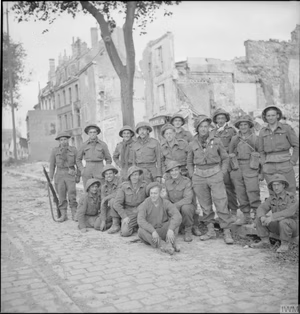
The British Army in the Normandy Campaign 1944 Men of 1st King's Own Scottish Borderers, 3rd Division, some of the first troops to enter Caen after Operation 'Charnwood', 9 July 1944.
The British Army in the Normandy Campaign 1944 Men of 1st King's Own Scottish Borderers, 3rd Division, some of the first troops to enter Caen after Operation 'Charnwood', 9 July 1944.

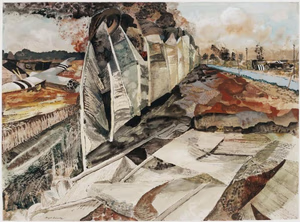
France- the Beach Head, 1944; the road between St Aubin and Benouville, the main supply route to the troops on the east side of the River Orne. It was under constant shell fire from the German batteries around Caen. image: a landscape showing a road under artillery bombardment. A line of protective camouflaged screens lie in the centre of the image, the screens in the foreground having been damaged. Two damaged Horsa gliders lie on the ground, one on the right next to the road, and the other on the left, its wings still intact. Plumes of black smoke, the result of the bombardment, emerge from behind the line of screens.
France- the Beach Head, 1944; the road between St Aubin and Benouville, the main supply route to the troops on the east side of the River Orne. It was under constant shell fire from the German batteries around Caen. image: a landscape showing a road under artillery bombardment. A line of protective camouflaged screens lie in the centre of the image, the screens in the foreground having been damaged. Two damaged Horsa gliders lie on the ground, one on the right next to the road, and the other on the left, its wings still intact. Plumes of black smoke, the result of the bombardment, emerge from behind the line of screens.

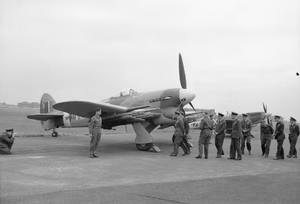
Royal Air Force- 2nd Tactical Air Force, 1943-1945. King George VI and his entourage of senior RAF officers walk over to Hawker Typhoon Mark IB, MN454 'HF-S', of No. 183 Squadron RAF, while inspecting aircraft and equipment which will be used in the forthcoming invasion of Normandy at Northolt, Middlesex. MN454 was flown by the Commanding Officer of 183 Squadron, Squadron Leader the Hon. F H Scarlett. Behind the King's party is a Supermarine Spitfire Mark IX of No. 222 Squadron RAF.
Royal Air Force- 2nd Tactical Air Force, 1943-1945. King George VI and his entourage of senior RAF officers walk over to Hawker Typhoon Mark IB, MN454 'HF-S', of No. 183 Squadron RAF, while inspecting aircraft and equipment which will be used in the forthcoming invasion of Normandy at Northolt, Middlesex. MN454 was flown by the Commanding Officer of 183 Squadron, Squadron Leader the Hon. F H Scarlett. Behind the King's party is a Supermarine Spitfire Mark IX of No. 222 Squadron RAF.

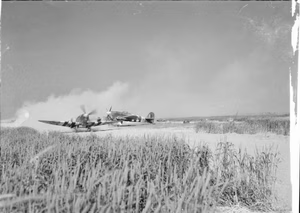
Royal Air Force- 2nd Tactical Air Force, 1943-1945. A Supermarine Spitfire Mark IX raises the dust as it taxies past a Hawker Typhoon Mark IB of No. 181 Squadron RAF, at an advanced landing ground - probably B2/Bazenville - in Normandy. The Spitfire is fitted with a 45-gallon 'slipper' fuel tank.
Royal Air Force- 2nd Tactical Air Force, 1943-1945. A Supermarine Spitfire Mark IX raises the dust as it taxies past a Hawker Typhoon Mark IB of No. 181 Squadron RAF, at an advanced landing ground - probably B2/Bazenville - in Normandy. The Spitfire is fitted with a 45-gallon 'slipper' fuel tank.

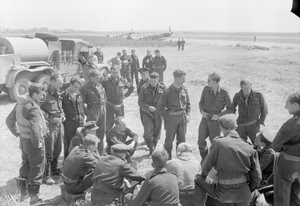
Royal Air Force- 2nd Tactical Air Force, 1943-1945. Hawker Typhoon pilots of Nos. 121 and 124 Wings discuss operations at B2/Bazenville, Normandy, on the evening of 14 June 1944. In the foreground, standing on the left, are five pilots of No. 175 Squadron RAF, including the Commanding Officer, Squadron Leader M R Ingle-Finch (fourth from left): on the right stand members of No. 181 Squadron RAF with their commander, Squadron Leader C D 'Kit' North-Lewis sitting on the far right. In the farthest group, those identified include Wing Commander C L Green (wearing helmet) leader of No. 121 Wing, and Squadron Leader W Pitt-Brown, commander of No. 174 Squadron RAF (on the right, wearing a lanyard). In the background, Supermarine Spitfire Mark IXs of No. 66 Squadron RAF stand at their dispersal points.
Royal Air Force- 2nd Tactical Air Force, 1943-1945. Hawker Typhoon pilots of Nos. 121 and 124 Wings discuss operations at B2/Bazenville, Normandy, on the evening of 14 June 1944. In the foreground, standing on the left, are five pilots of No. 175 Squadron RAF, including the Commanding Officer, Squadron Leader M R Ingle-Finch (fourth from left): on the right stand members of No. 181 Squadron RAF with their commander, Squadron Leader C D 'Kit' North-Lewis sitting on the far right. In the farthest group, those identified include Wing Commander C L Green (wearing helmet) leader of No. 121 Wing, and Squadron Leader W Pitt-Brown, commander of No. 174 Squadron RAF (on the right, wearing a lanyard). In the background, Supermarine Spitfire Mark IXs of No. 66 Squadron RAF stand at their dispersal points.

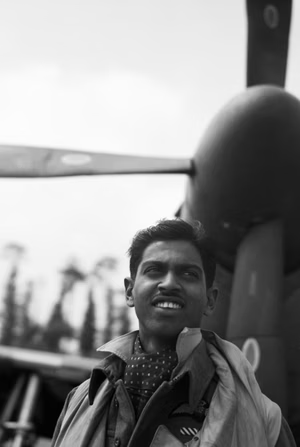
Flight Lieutenant C L F "Jimmy" Talalla of No. 122 Squadron RAF, standing in front of his North American Mustang Mk III at Ellon, Normandy, 6 August 1944. Flight Lieutenant C L F "Jimmy" Talalla of No. 122 Squadron RAF, standing in front of his North American Mustang Mark III at B12/ Ellon, Normandy. Born of Singhalese parents in Kuala Lumpur, Malaya, Talalla joined the RAF in 1941 and served as a sergeant pilot with No. 118 Squadron RAF, flying Supermarine Spitfires, before being commissioned in 1942. He joined 122 Squadron as a flight commander in 1944 and finished the war having shot down 5 enemy aircraft. His brother, Warrant Officer H C B Talalla, a Hawker Typhoon pilot serving with No. 182 Squadron RAF, was killed in action, over the Falaise area on 25 July 1944.
Flight Lieutenant C L F "Jimmy" Talalla of No. 122 Squadron RAF, standing in front of his North American Mustang Mk III at Ellon, Normandy, 6 August 1944. Flight Lieutenant C L F "Jimmy" Talalla of No. 122 Squadron RAF, standing in front of his North American Mustang Mark III at B12/ Ellon, Normandy. Born of Singhalese parents in Kuala Lumpur, Malaya, Talalla joined the RAF in 1941 and served as a sergeant pilot with No. 118 Squadron RAF, flying Supermarine Spitfires, before being commissioned in 1942. He joined 122 Squadron as a flight commander in 1944 and finished the war having shot down 5 enemy aircraft. His brother, Warrant Officer H C B Talalla, a Hawker Typhoon pilot serving with No. 182 Squadron RAF, was killed in action, over the Falaise area on 25 July 1944.

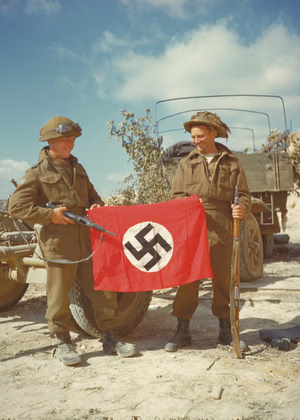
Ces deux soldats canadiens arborent un drapeau nazi qu'ils ont capturé dans les galeries de la carrière des Aucrais à Haut-Mesnil. Le fanion nazi ne semble pas avoir beaucoup servi et était vraisemblablement plié dans la sacoche de l'attelage, celle qui gît à leurs pieds sur la droite de la photo. Derrière les deux soldats, ce qui ressemble à une remorque "polyvalente" allemande Sd Anh 104, voir ici : www.lonesentry.com/ordnance/sd-anh-203-special-trailer.html Voir le camouflage fait de branches accrochées sur les côtés du camion. Le soldat de gauche est muni d'une Sten MkII fr.wikipedia.org/wiki/Sten_Mk_II et celui de droite d'un fusil Lee-Enfield n°4 MkI fr.wikipedia.org/wiki/Lee_Enfield_n%C2%B04 Photo prise le 10 Août 1944. A gauche le Pte. L.B. Roy, Cornwall, Ontario du The Queen's Own Cameron Highlanders of Canada de la 6th Infantry Brigade de la 2nd Cdn ID, il porte sur son casque une paire de lunettes de motocycliste allemand, voir ici: www.flickr.com/photos/mlq/8500700876/in/photostream Voir ici, avec un autre camarade au même endroit : www.flickr.com/photos/mlq/2547930365/in/pool-autresphotos... www.flickr.com/photos/mlq/2547930361/ Ce hameau a été libéré le 8 août, dans le cadre de " Operation Totalize " par The Argyll and Sutherland Highlanders of Canada-Princess Louise's de la 10th Inf. Brigade de la 4th Canadian Armoured Div. Dans les galeries de la carrière des Aucrais, les Allemands ont stocké du matériel, et une maquette de V2 à l'échelle 1 avec un chariot de transport du missile. Le 14 août, une erreur d'interprétation de signaux de fumée, fait que les bombardiers lourds du Bomber Command larguent leurs bombes sur les Canadiens et les Polonais à Haut-Mesnil faisant 400 victimes dont 65 morts. Pour aller plus loin : fr.wikipedia.org/wiki/Op%C3%A9ration_Totalize www.etab.ac-caen.fr/discip/geologie/mesozoi/bathoni/calca...
Ces deux soldats canadiens arborent un drapeau nazi qu'ils ont capturé dans les galeries de la carrière des Aucrais à Haut-Mesnil. Le fanion nazi ne semble pas avoir beaucoup servi et était vraisemblablement plié dans la sacoche de l'attelage, celle qui gît à leurs pieds sur la droite de la photo. Derrière les deux soldats, ce qui ressemble à une remorque "polyvalente" allemande Sd Anh 104, voir ici : www.lonesentry.com/ordnance/sd-anh-203-special-trailer.html Voir le camouflage fait de branches accrochées sur les côtés du camion. Le soldat de gauche est muni d'une Sten MkII fr.wikipedia.org/wiki/Sten_Mk_II et celui de droite d'un fusil Lee-Enfield n°4 MkI fr.wikipedia.org/wiki/Lee_Enfield_n%C2%B04 Photo prise le 10 Août 1944. A gauche le Pte. L.B. Roy, Cornwall, Ontario du The Queen's Own Cameron Highlanders of Canada de la 6th Infantry Brigade de la 2nd Cdn ID, il porte sur son casque une paire de lunettes de motocycliste allemand, voir ici: www.flickr.com/photos/mlq/8500700876/in/photostream Voir ici, avec un autre camarade au même endroit : www.flickr.com/photos/mlq/2547930365/in/pool-autresphotos... www.flickr.com/photos/mlq/2547930361/ Ce hameau a été libéré le 8 août, dans le cadre de " Operation Totalize " par The Argyll and Sutherland Highlanders of Canada-Princess Louise's de la 10th Inf. Brigade de la 4th Canadian Armoured Div. Dans les galeries de la carrière des Aucrais, les Allemands ont stocké du matériel, et une maquette de V2 à l'échelle 1 avec un chariot de transport du missile. Le 14 août, une erreur d'interprétation de signaux de fumée, fait que les bombardiers lourds du Bomber Command larguent leurs bombes sur les Canadiens et les Polonais à Haut-Mesnil faisant 400 victimes dont 65 morts. Pour aller plus loin : fr.wikipedia.org/wiki/Op%C3%A9ration_Totalize www.etab.ac-caen.fr/discip/geologie/mesozoi/bathoni/calca...

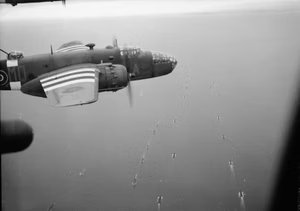
Royal Air Force- 2nd Tactical Air Force, 1943-1945. North American Mitchell Mk IIs of No. 226 Squadron RAF based at Hartford Bridge, Hampshire, fly over an Allied convoy bound for France, while on their way to bomb the 21st Panzer Division, dispersed in the Foret de Grimbosq south of Caen.
Royal Air Force- 2nd Tactical Air Force, 1943-1945. North American Mitchell Mk IIs of No. 226 Squadron RAF based at Hartford Bridge, Hampshire, fly over an Allied convoy bound for France, while on their way to bomb the 21st Panzer Division, dispersed in the Foret de Grimbosq south of Caen.

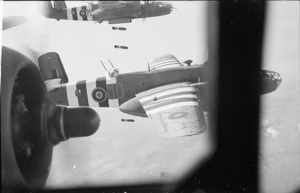
Royal Air Force- 2nd Tactical Air Force, 1943-1945 North American Mitchell Mk IIs of No. 226 Squadron RAF based at Hartford Bridge, Hampshire, dropping 500-lb MC bombs over the Foret de Grimbosq south of Caen, in the evening of 12 June 1944. This operation was the biggest daylight raid mounted by No. 2 Group since 6 June, in which 90 aircraft bombed the 21st Panzer Division which was dispersed in the forest.
Royal Air Force- 2nd Tactical Air Force, 1943-1945 North American Mitchell Mk IIs of No. 226 Squadron RAF based at Hartford Bridge, Hampshire, dropping 500-lb MC bombs over the Foret de Grimbosq south of Caen, in the evening of 12 June 1944. This operation was the biggest daylight raid mounted by No. 2 Group since 6 June, in which 90 aircraft bombed the 21st Panzer Division which was dispersed in the forest.

The British Army in Normandy 1944 Sherman tanks carrying infantry wait to advance at the start of Operation 'Goodwood', 18 July 1944.
The British Army in Normandy 1944 Sherman tanks carrying infantry wait to advance at the start of Operation 'Goodwood', 18 July 1944.

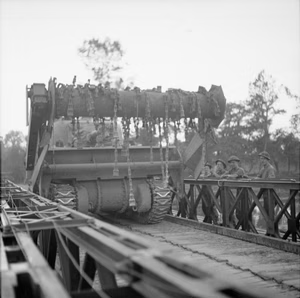
The British Army in Normandy 1944 A Sherman Crab flail tank crosses a Bailey bridge over the Orne, as it moves up to the start line for Operation 'Goodwood', 18 July 1944.
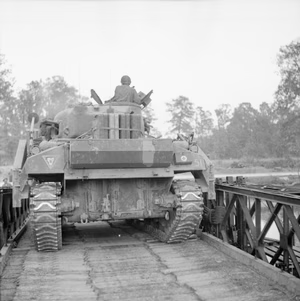
The British Army in Normandy 1944 A Sherman Crab flail tank crosses a Bailey bridge over the Orne, as it moves up to the start line for Operation 'Goodwood', 18 July 1944.
The British Army in Normandy 1944 A Sherman Crab flail tank crosses a Bailey bridge over the Orne, as it moves up to the start line for Operation 'Goodwood', 18 July 1944.

The British Army in Normandy 1944 A Sherman Crab flail tank crosses a Bailey bridge over the Orne, as it moves up to the start line for Operation 'Goodwood', 18 July 1944.

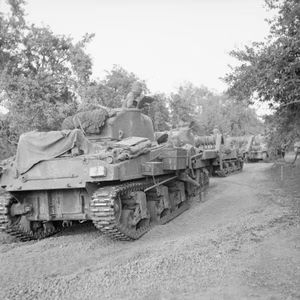
The British Army in Normandy 1944 Sherman Crab flail tanks wait to advance at the start of Operation 'Goodwood', 18 July 1944.
The British Army in Normandy 1944 Sherman Crab flail tanks wait to advance at the start of Operation 'Goodwood', 18 July 1944.

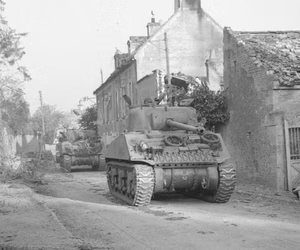
Sherman Firefly passes through Ecosville during Operation Goodwood, 18 July 1944
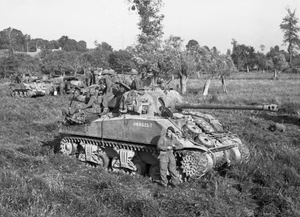
Sherman Firefly passes through Ecosville during Operation Goodwood, 18 July 1944

Sherman Firefly with its squadron await the order to move forward at the start of Operation Goodwood, 18 July 1944.
Sherman Firefly with its squadron await the order to move forward at the start of Operation Goodwood, 18 July 1944.

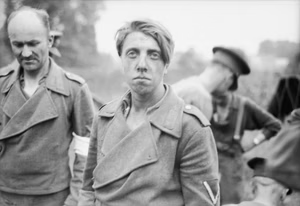
The British Army in North-west Europe 1944-45 German prisoners taken during Operation 'Goodwood', 19 July 1944.
The British Army in North-west Europe 1944-45 German prisoners taken during Operation 'Goodwood', 19 July 1944.

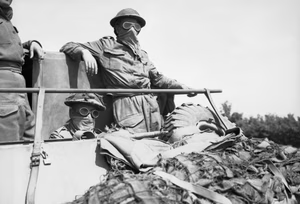
Guardsmen of 3rd Irish Guards in a Loyd carrier, wrapped up against the clouds of dust, during Operation 'Goodwood', Normandy, 18 July 1944. Guardsmen of 3rd Irish Guards in a Loyd carrier, wrapped up against the clouds of dust, during Operation 'Goodwood', 18 July 1944.
Guardsmen of 3rd Irish Guards in a Loyd carrier, wrapped up against the clouds of dust, during Operation 'Goodwood', Normandy, 18 July 1944. Guardsmen of 3rd Irish Guards in a Loyd carrier, wrapped up against the clouds of dust, during Operation 'Goodwood', 18 July 1944.

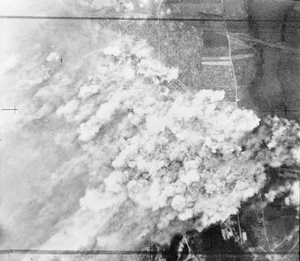
Royal Air Force Bomber Command, 1942-1945. Vertical aerial photograph showing smoke from exploding bombs smothering the Colombelles steelworks, east of Caen, France during the attack by aircraft of Bomber Command in support of the Second Army's armoured advance in the Normandy battle area, (Operation GOODWOOD).
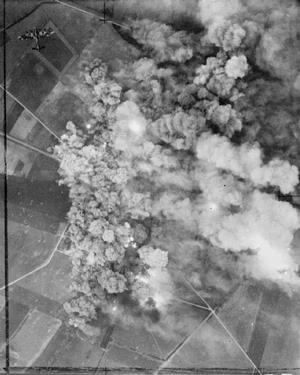
Royal Air Force Bomber Command, 1942-1945. Vertical aerial photograph showing smoke from exploding bombs smothering the Colombelles steelworks, east of Caen, France during the attack by aircraft of Bomber Command in support of the Second Army's armoured advance in the Normandy battle area, (Operation GOODWOOD).

Royal Air Force Bomber Command, 1942-1945. An Avro Lancaster leaves the target area (top left), as smoke from exploding bombs smothers the village of Villers-Bocage, south-west of Caen, France. 942 aircraft of Bomber Command were despatched to bomb German-held positions, in support of the Second Army attack in the Normandy battle area (Operation GOODWOOD), on the morning of 18 July 1944.
Royal Air Force Bomber Command, 1942-1945. An Avro Lancaster leaves the target area (top left), as smoke from exploding bombs smothers the village of Villers-Bocage, south-west of Caen, France. 942 aircraft of Bomber Command were despatched to bomb German-held positions, in support of the Second Army attack in the Normandy battle area (Operation GOODWOOD), on the morning of 18 July 1944.

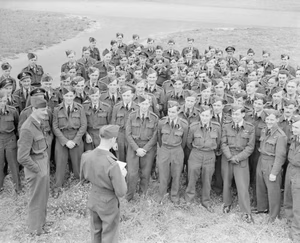
Royal Air Force 1939-1945- Bomber Command Watched by the CO, Wing Commander D A Gardner (left), aircrew of No 166 Squadron at Kirmington, Lincolnshire, gather on 20 July 1944 to hear the Adjutant, Flight Lieutenant F C Tigh, read out a congratulatory message from Field Marshal Montgomery, thanking the bomber crews for their efforts supporting the British Second Army's armoured offensive in Normandy, Operation 'Goodwood'.
Royal Air Force 1939-1945- Bomber Command Watched by the CO, Wing Commander D A Gardner (left), aircrew of No 166 Squadron at Kirmington, Lincolnshire, gather on 20 July 1944 to hear the Adjutant, Flight Lieutenant F C Tigh, read out a congratulatory message from Field Marshal Montgomery, thanking the bomber crews for their efforts supporting the British Second Army's armoured offensive in Normandy, Operation 'Goodwood'.

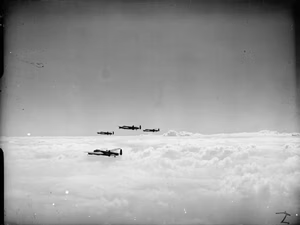
Royal Air Force Bomber Command, 1942-1945. Four Avro Lancasters of No. 514 Squadron RAF flying over complete cloud cover during a daylight attack on fortified villages east of Caen, in support of the Second Army's armoured offensive in the Normandy battle area (Operation GOODWOOD).
Royal Air Force Bomber Command, 1942-1945. Four Avro Lancasters of No. 514 Squadron RAF flying over complete cloud cover during a daylight attack on fortified villages east of Caen, in support of the Second Army's armoured offensive in the Normandy battle area (Operation GOODWOOD).

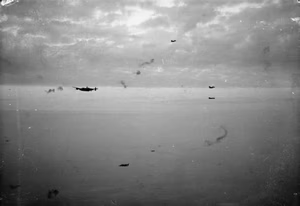
Royal Air Force Bomber Command, 1942-1945. Avro Lancasters and Handley Page Halifaxes fly through anti-aircraft fire to bomb fortified villages east of Caen, France in a dawn attack by 942 aircraft, before the commencement of the Second Army's armoured attack in the Normandy battle area (Operation GOODWOOD).
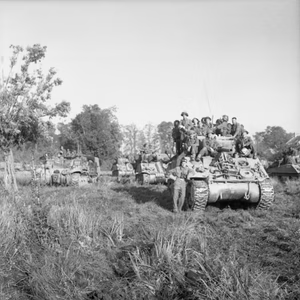
Royal Air Force Bomber Command, 1942-1945. Avro Lancasters and Handley Page Halifaxes fly through anti-aircraft fire to bomb fortified villages east of Caen, France in a dawn attack by 942 aircraft, before the commencement of the Second Army's armoured attack in the Normandy battle area (Operation GOODWOOD).

Sherman tanks carrying infantry wait to advance at the start of Operation 'Goodwood', Normandy, 18 July 1944. Sherman tanks carrying infantry wait to advance at the start of Operation 'Goodwood', 18 July 1944.
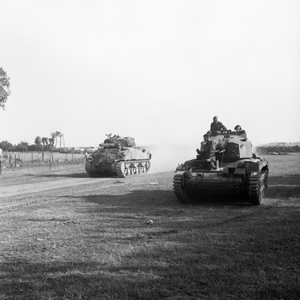
Sherman tanks carrying infantry wait to advance at the start of Operation 'Goodwood', Normandy, 18 July 1944. Sherman tanks carrying infantry wait to advance at the start of Operation 'Goodwood', 18 July 1944.

A Sherman tank and Crusader anti-aircraft tank of the Staffordshire Yeomanry, 27th Armoured Brigade, during Operation 'Goodwood', Normandy, 18 July 1944. A Sherman tank and Crusader AA Mk III of the Staffordshire Yeomanry, 27th Armoured Brigade, during Operation 'Goodwood', 18 July 1944.
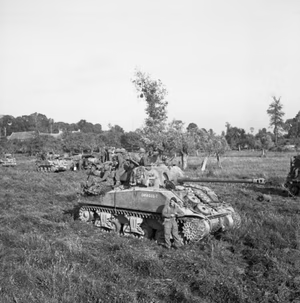
A Sherman tank and Crusader anti-aircraft tank of the Staffordshire Yeomanry, 27th Armoured Brigade, during Operation 'Goodwood', Normandy, 18 July 1944. A Sherman tank and Crusader AA Mk III of the Staffordshire Yeomanry, 27th Armoured Brigade, during Operation 'Goodwood', 18 July 1944.

British infantry and Sherman tanks wait to advance at the start of Operation 'Goodwood', Normandy, 18 July 1944. Infantry and Sherman tanks wait to advance at the start of Operation 'Goodwood', 18 July 1944. A Sherman Firefly is in the foreground.
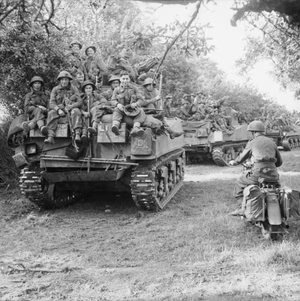
British infantry and Sherman tanks wait to advance at the start of Operation 'Goodwood', Normandy, 18 July 1944. Infantry and Sherman tanks wait to advance at the start of Operation 'Goodwood', 18 July 1944. A Sherman Firefly is in the foreground.

Sherman tanks of the Staffordshire Yeomanry, 27th Armoured Brigade, carrying infantry from 3rd Division, move up at the start of Operation 'Goodwood', Normandy, 18 July 1944. Sherman tanks of the Staffordshire Yeomanry, 27th Armoured Brigade, carrying infantry from 3rd Division, move up at the start of Operation 'Goodwood', 18 July 1944.
Sherman tanks of the Staffordshire Yeomanry, 27th Armoured Brigade, carrying infantry from 3rd Division, move up at the start of Operation 'Goodwood', Normandy, 18 July 1944. Sherman tanks of the Staffordshire Yeomanry, 27th Armoured Brigade, carrying infantry from 3rd Division, move up at the start of Operation 'Goodwood', 18 July 1944.

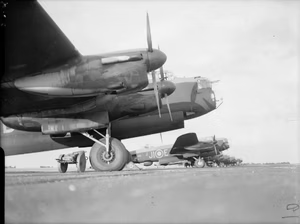
IWM caption : Avro Lancasters of No. 514 Squadron RAF , lined up at Waterbeach , Cambridgeshire, before taking part in a daylight attack on fortified villages east of Caen, in support of the Second Army's armoured offensive in the Normandy battle area ( Operation GOODWOOD ).
IWM caption : Avro Lancasters of No. 514 Squadron RAF , lined up at Waterbeach , Cambridgeshire, before taking part in a daylight attack on fortified villages east of Caen, in support of the Second Army's armoured offensive in the Normandy battle area ( Operation GOODWOOD ).
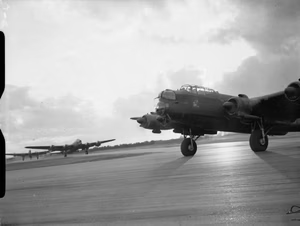
IWM caption : Avro Lancaster B Mark IIs of No. 514 Squadron RAF taxy onto the main runway at Waterbeach , Cambridgeshire, for a daylight attack on fortified villages east of Caen, in support of the Second Army's armoured offensive in the Normandy battle area ( Operation GOODWOOD ).

IWM caption : Avro Lancaster B Mark IIs of No. 514 Squadron RAF taxy onto the main runway at Waterbeach , Cambridgeshire, for a daylight attack on fortified villages east of Caen, in support of the Second Army's armoured offensive in the Normandy battle area ( Operation GOODWOOD ).

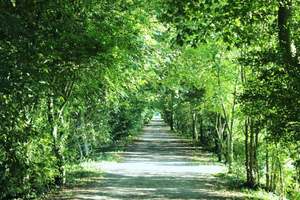
Le 9 juillet 1944, par ce chemin, la 59th Staffordshire Division britannique, venant de cambes-en-Plaine , dans le cadre de l' opération Charnwwod est entrée dans Épron ( Calvados )
Le 9 juillet 1944, par ce chemin, la 59th Staffordshire Division britannique, venant de cambes-en-Plaine , dans le cadre de l' opération Charnwwod est entrée dans Épron ( Calvados )

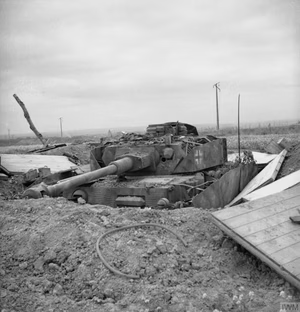
A knocked-out German PzKpfw IV tank in a hull-down position, 13 July 1944. Additional info: "A dug-in Panzer IV of the 1/22nd Panzer Regiment, photographed near Lebisey after being knocked out during Operation Charnwood.(Battle for Caen, p. 34, by Simon Trew. ISBN:0-7509-3010-1)
A knocked-out German PzKpfw IV tank in a hull-down position, 13 July 1944. Additional info: "A dug-in Panzer IV of the 1/22nd Panzer Regiment, photographed near Lebisey after being knocked out during Operation Charnwood.(Battle for Caen, p. 34, by Simon Trew. ISBN:0-7509-3010-1)

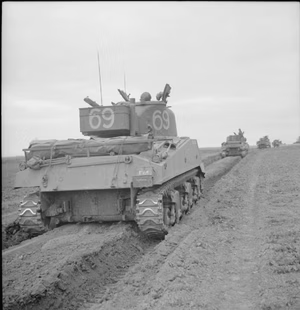
The British Army in the Normandy Campaign 1944 Sherman tanks of 33rd Armoured Brigade during Operation 'Charnwood', the attack on Caen, 8 July 1944.
The British Army in the Normandy Campaign 1944 Sherman tanks of 33rd Armoured Brigade during Operation 'Charnwood', the attack on Caen, 8 July 1944.

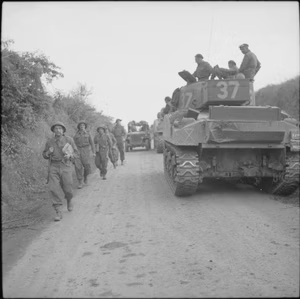
The British Army in the Normandy Campaign 1944 Infantry pass Sherman tanks of 33rd Armoured Brigade near Lebisey Wood, during Operation 'Charnwood', 8 July 1944.
The British Army in the Normandy Campaign 1944 Infantry pass Sherman tanks of 33rd Armoured Brigade near Lebisey Wood, during Operation 'Charnwood', 8 July 1944.

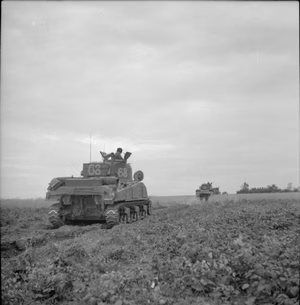
The British Army in Normandy 1944 Sherman tanks of 33rd Armoured Brigade during Operation 'Charnwood', the attack on Caen, 8 July 1944.
The British Army in Normandy 1944 Sherman tanks of 33rd Armoured Brigade during Operation 'Charnwood', the attack on Caen, 8 July 1944.

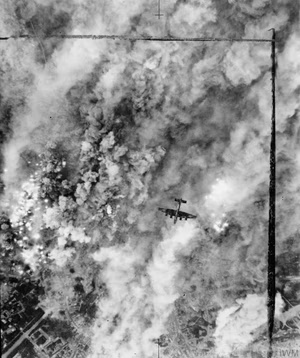
Royal Air Force Bomber Command, 1942-1945. A Handley Page Halifax of No. 4 Group flies over the suburbs of Caen, France, during a major daylight raid to assist the Normandy land battle during Operation CHARNWOOD. 467 aircraft took part in the attack, which was originally intended to have bombed German strongpoints north of Caen, but the bombing area was eventually shifted nearer the city because of the proximity of Allied troops to the original targets. The resulting bombing devastated the northern suburbs.
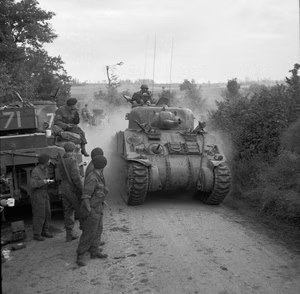
Royal Air Force Bomber Command, 1942-1945. A Handley Page Halifax of No. 4 Group flies over the suburbs of Caen, France, during a major daylight raid to assist the Normandy land battle during Operation CHARNWOOD. 467 aircraft took part in the attack, which was originally intended to have bombed German strongpoints north of Caen, but the bombing area was eventually shifted nearer the city because of the proximity of Allied troops to the original targets. The resulting bombing devastated the northern suburbs.

The Battle For Normandy, 1944 Sherman tanks of 33rd Armoured Brigade, supporting 3rd Infantry Division, moving forward near Lebisey Wood for Operation CHARNWOOD, the assault on Caen, 8 July 1944.
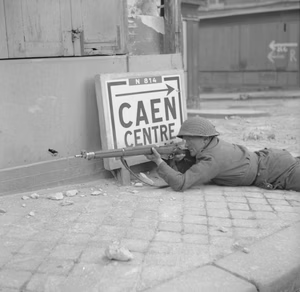
The Battle For Normandy, 1944 Sherman tanks of 33rd Armoured Brigade, supporting 3rd Infantry Division, moving forward near Lebisey Wood for Operation CHARNWOOD, the assault on Caen, 8 July 1944.

THE BRITISH ARMY IN THE NORMANDY CAMPAIGN 1944. A soldier 'keeps a sharp lookout for snipers' in the ruins of Caen, 9 July 1944. He is armed with a Lee Enfield .303 rifle and is wearing a Mk III steel helmet.
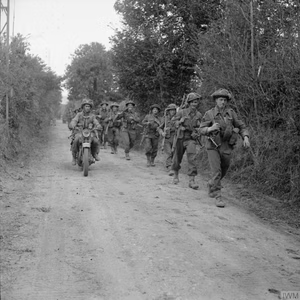
THE BRITISH ARMY IN THE NORMANDY CAMPAIGN 1944. A soldier 'keeps a sharp lookout for snipers' in the ruins of Caen, 9 July 1944. He is armed with a Lee Enfield .303 rifle and is wearing a Mk III steel helmet.

The British Army in the Normandy Campaign 1944 A motorcycle and infantry of the 2nd Glasgow Highlanders, 46th Brigade, 15th (Scottish) Division, during Operation 'Bluecoat', the offensive south-east of Caumont, 30 July 1944.
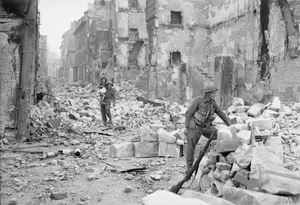
The British Army in the Normandy Campaign 1944 A motorcycle and infantry of the 2nd Glasgow Highlanders, 46th Brigade, 15th (Scottish) Division, during Operation 'Bluecoat', the offensive south-east of Caumont, 30 July 1944.

The British Army in Normandy 1944 A British soldier carries a little girl through the devastation of Caen, 10 July 1944.
The British Army in Normandy 1944 A British soldier carries a little girl through the devastation of Caen, 10 July 1944.

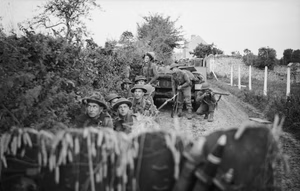
The British Army in the Normandy Campaign 1944 Troops of 130th Brigade, 43rd (Wessex) Division take cover from mortar fire, 10 July 1944.
The British Army in the Normandy Campaign 1944 Troops of 130th Brigade, 43rd (Wessex) Division take cover from mortar fire, 10 July 1944.

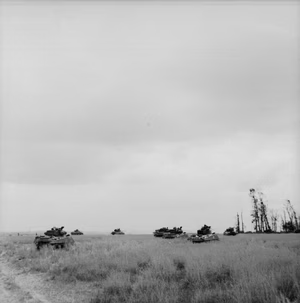
The British Army in Normandy 1944 Sherman tanks advance in the Odon valley near Evrecy, 16 July 1944.
The British Army in Normandy 1944 Sherman tanks advance in the Odon valley near Evrecy, 16 July 1944.

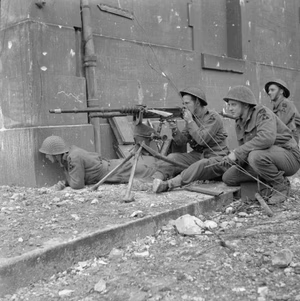
The British Army in Normandy 1944 Troops of 1 Kings Own Scottish Borderers (KOSB), 9th Brigade, 3rd Infantry Division, firing a captured Hotchkiss machine gun during street fighting in Caen, 10 July 1944.
The British Army in Normandy 1944 Troops of 1 Kings Own Scottish Borderers (KOSB), 9th Brigade, 3rd Infantry Division, firing a captured Hotchkiss machine gun during street fighting in Caen, 10 July 1944.

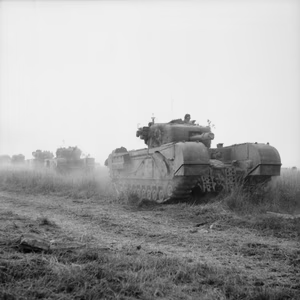
The British Army in Normandy 1944 Churchill tanks moving into position at dawn to support the attack on Evrecy, 16 July 1944.
The British Army in Normandy 1944 Churchill tanks moving into position at dawn to support the attack on Evrecy, 16 July 1944.

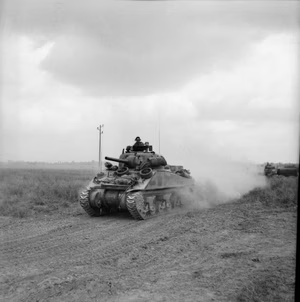
The British Army in Normandy 1944 A Sherman tank advances during operations in the Odon valley, west of Caen, 16 July 1944.
The British Army in Normandy 1944 A Sherman tank advances during operations in the Odon valley, west of Caen, 16 July 1944.

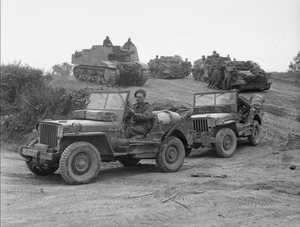
The British Army in Normandy 1944 — U.S. made jeeps leading a column with carriers and a Sexton 25-pdr self-propelled gun, moving forward south of Caen, 1 August 1944. — Likely from the U.K. Army Film and Photographic Unit
The British Army in Normandy 1944 — U.S. made jeeps leading a column with carriers and a Sexton 25-pdr self-propelled gun, moving forward south of Caen, 1 August 1944. — Likely from the U.K. Army Film and Photographic Unit

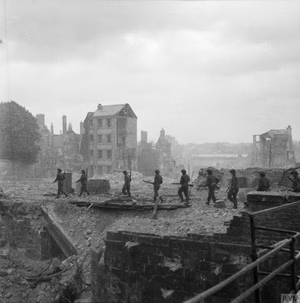
The British Army in Normandy 1944 Royal Engineers move through the ruins of Caen, looking for mines and booby-traps 10 July 1944.
The British Army in Normandy 1944 Royal Engineers move through the ruins of Caen, looking for mines and booby-traps 10 July 1944.

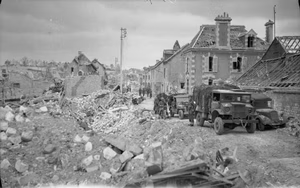
The British Army in Normandy 1944 A jeep and trucks parked in a devastated street in Caen, 10 July 1944.
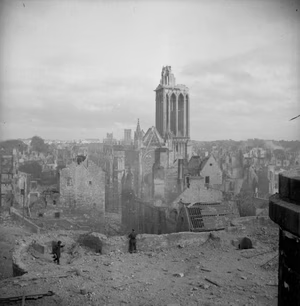
The British Army in Normandy 1944 A jeep and trucks parked in a devastated street in Caen, 10 July 1944.

The British Army in Normandy 1944 A general view of Caen showing the extensive damage caused by Allied bombing, 9 July 1944.
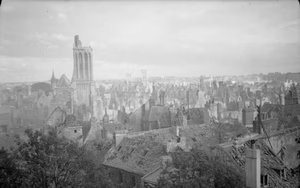
The British Army in Normandy 1944 A general view of Caen showing the extensive damage caused by Allied bombing, 9 July 1944.
The British Army in Normandy 1944 A general view of Caen showing the extensive damage caused by Allied bombing, 9 July 1944.

The British Army in Normandy 1944 A general view of Caen showing the extensive damage caused by Allied bombing, 9 July 1944.

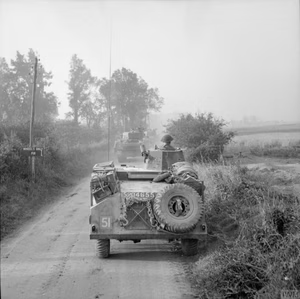
A Morris light reconnaissance car and, in the background, Sherman Crab flail tanks move up to the battle area for Operation 'Goodwood', 18 July 1944.
A Morris light reconnaissance car and, in the background, Sherman Crab flail tanks move up to the battle area for Operation 'Goodwood', 18 July 1944.

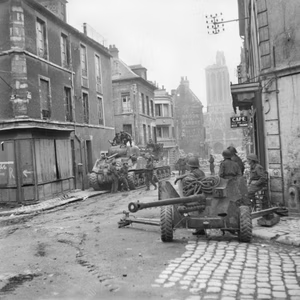
British Sherman tanks and a 6-pdr anti-tank gun in the centre of Caen, Normandy, 10 July 1944. Sherman tanks and 6-pdr anti-tank gun in the centre of Caen, 10 July 1944.
British Sherman tanks and a 6-pdr anti-tank gun in the centre of Caen, Normandy, 10 July 1944. Sherman tanks and 6-pdr anti-tank gun in the centre of Caen, 10 July 1944.

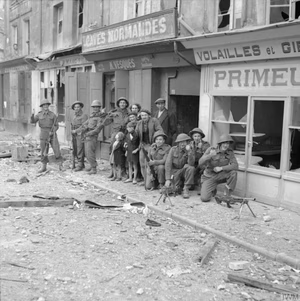
The British Army in Normandy 1944 Some of the first troops to enter Caen pose with local inhabitants outside wrecked shops, 9 July 1944.
The British Army in Normandy 1944 Some of the first troops to enter Caen pose with local inhabitants outside wrecked shops, 9 July 1944.

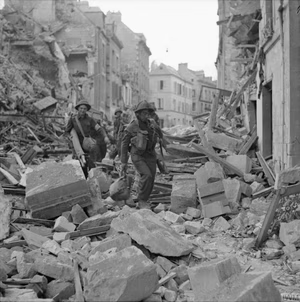
The British Army in Normandy 1944 Troops pick their way through the rubble of Caen, 9 July 1944.
The British Army in Normandy 1944 Troops pick their way through the rubble of Caen, 9 July 1944.

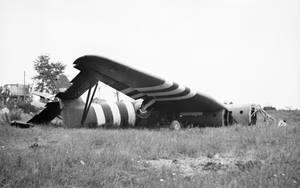
The British Army in Normandy 1944 Horsa gliders near Pegasus Bridge over the Caen canal at Benouville, 12 July 1944.
The British Army in Normandy 1944 Horsa gliders near Pegasus Bridge over the Caen canal at Benouville, 12 July 1944.

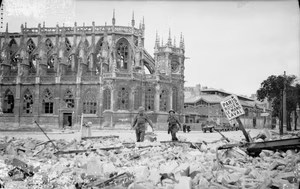
The British Army in Normandy 1944 Troops in front of Caen Cathedral, 10 July 1944.
The British Army in Normandy 1944 Troops in front of Caen Cathedral, 10 July 1944.

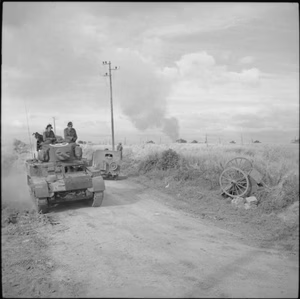
The British Army in the Normandy Campaign 1944 Stuart tank during the assault on Caen, 9 July 1944.
The British Army in the Normandy Campaign 1944 Stuart tank during the assault on Caen, 9 July 1944.

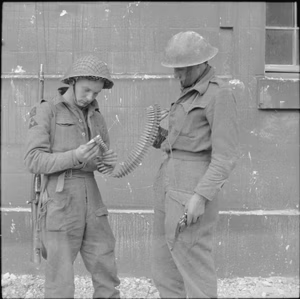
The British Army in the Normandy Campaign 1944 Soldiers from 3rd Division in Caen examine a belt of Hotchkiss machine-gun ammunition, 10 July 1944.

The British Army in the Normandy Campaign 1944 Soldiers from 3rd Division in Caen examine a belt of Hotchkiss machine-gun ammunition, 10 July 1944.