Tracefront
← Map
BattlefieldApproximate location

Sainte-Mère-Église

Calvados, FR

0 artifacts5 photographsSubmitted by Admin

Photographs (5)

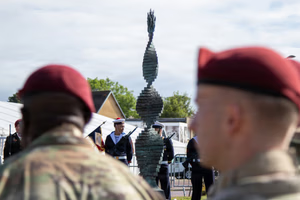
U.S. paratroopers assigned to the 82nd Airborne Division chorus prepare to celebrate the Three Cemeteries Monument during the 82nd commemoration of D-Day at Sainte Mere Eglise, France, June 2, 2026. The Three Cemeteries Monument honors the 14,000 U.S. troops, particularly from the 82nd Airborne Division, who fell during the battle to liberate Normandy, France. On June 6, 1944, the United States military participated in the largest multinational amphibious landing and operational military airdrop in history. This assault led to France’s liberation from the German military and the eventual defeat of the Nazis. By the end of the D-Day invasion, more than 9,000 allied troops were dead or wounded. (U.S. Army photo by Maj. Joe Legros)
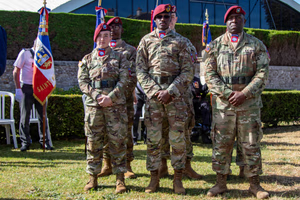
U.S. paratroopers assigned to the 82nd Airborne Division chorus prepare to celebrate the Three Cemeteries Monument during the 82nd commemoration of D-Day at Sainte Mere Eglise, France, June 2, 2026. The Three Cemeteries Monument honors the 14,000 U.S. troops, particularly from the 82nd Airborne Division, who fell during the battle to liberate Normandy, France. On June 6, 1944, the United States military participated in the largest multinational amphibious landing and operational military airdrop in history. This assault led to France’s liberation from the German military and the eventual defeat of the Nazis. By the end of the D-Day invasion, more than 9,000 allied troops were dead or wounded. (U.S. Army photo by Maj. Joe Legros)
U.S. paratroopers assigned to the 82nd Airborne Division chorus prepare to celebrate the Three Cemeteries Monument during the 82nd commemoration of D-Day at Sainte Mere Eglise, France, June 2, 2026. The Three Cemeteries Monument honors the 14,000 U.S. troops, particularly from the 82nd Airborne Division, who fell during the battle to liberate Normandy, France. On June 6, 1944, the United States military participated in the largest multinational amphibious landing and operational military airdrop in history. This assault led to France’s liberation from the German military and the eventual defeat of the Nazis. By the end of the D-Day invasion, more than 9,000 allied troops were dead or wounded. (U.S. Army photo by Maj. Joe Legros)

U.S. paratroopers assigned to the 82nd Airborne Division chorus prepare to celebrate the Three Cemeteries Monument during the 82nd commemoration of D-Day at Sainte Mere Eglise, France, June 2, 2026. The Three Cemeteries Monument honors the 14,000 U.S. troops, particularly from the 82nd Airborne Division, who fell during the battle to liberate Normandy, France. On June 6, 1944, the United States military participated in the largest multinational amphibious landing and operational military airdrop in history. This assault led to France’s liberation from the German military and the eventual defeat of the Nazis. By the end of the D-Day invasion, more than 9,000 allied troops were dead or wounded. (U.S. Army photo by Maj. Joe Legros)

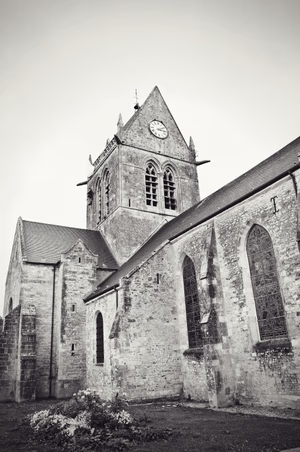
The Sainte-Mère-Église church in Normandy was built in the 11th century in the Romanesque style and completed four centuries later in the Gothic style. It’s topped by a saddleback bell tower and gained a place in history on D-Day as one of the first towns to be liberated. This was achieved through the efforts of American paratroopers who were dropped into Sainte-Mère-Église in the early hours of 6th June 1944. Photo from the site of Airborne Museum , a French museum dedicated to the memory of paratroopers of the 82nd and 101st Airborne Divisions of the United States Army who parachuted into Normandy on the night of June 5–6, 1944. Sainte-Mère-Église, Arrondissement de Cherbourg, Normandy. Summer holidays in France, August 2019
The Sainte-Mère-Église church in Normandy was built in the 11th century in the Romanesque style and completed four centuries later in the Gothic style. It’s topped by a saddleback bell tower and gained a place in history on D-Day as one of the first towns to be liberated. This was achieved through the efforts of American paratroopers who were dropped into Sainte-Mère-Église in the early hours of 6th June 1944. Photo from the site of Airborne Museum , a French museum dedicated to the memory of paratroopers of the 82nd and 101st Airborne Divisions of the United States Army who parachuted into Normandy on the night of June 5–6, 1944. Sainte-Mère-Église, Arrondissement de Cherbourg, Normandy. Summer holidays in France, August 2019

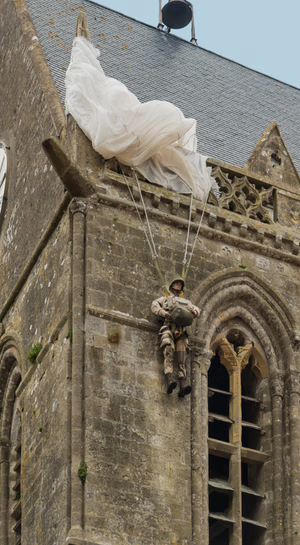
US Paratrooper, representing John Steele (paratrooper) , 82nd Airborne, june 6th, 1944, bell tower of church of Sainte-Mère-Église, Manche, Normandy, France.
US Paratrooper, representing John Steele (paratrooper) , 82nd Airborne, june 6th, 1944, bell tower of church of Sainte-Mère-Église, Manche, Normandy, France.

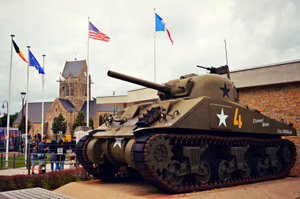
This M4A1(76)W HVSS Sherman Tank (sometimes called the M4A1E8 Easy 8) is part of the WW2 D-Day landings display at the US Airborne Forces Museum in Saint-Mere-Eglise. The Museum is built on the site of the house that was bombed and burnt down on D-Day that is seen on the film the Longest Day. It was the light from this fire that enabled the Germans stationed in the town to shot so many paratroopers as they were blown off course and landed in Saint-Mere-Eglise. The problem is that this version of the Sherman tank never took part in the D-Day landings on 6th June 1944 or the battle for Normandy. The first 'Easy Eight' M4A1(76)W HVSS Sherman tanks only arrived in Europe in December 1944. Photo of misc. World War II militaria in Airborne Museum , a French museum dedicated to the memory of paratroopers of the 82nd and 101st Airborne Divisions of the United States Army who parachuted into Normandy on the night of June 5–6, 1944. Sainte-Mère-Église, Arrondissement de Cherbourg, Normandy. Summer holidays in France, August 2019

This M4A1(76)W HVSS Sherman Tank (sometimes called the M4A1E8 Easy 8) is part of the WW2 D-Day landings display at the US Airborne Forces Museum in Saint-Mere-Eglise. The Museum is built on the site of the house that was bombed and burnt down on D-Day that is seen on the film the Longest Day. It was the light from this fire that enabled the Germans stationed in the town to shot so many paratroopers as they were blown off course and landed in Saint-Mere-Eglise. The problem is that this version of the Sherman tank never took part in the D-Day landings on 6th June 1944 or the battle for Normandy. The first 'Easy Eight' M4A1(76)W HVSS Sherman tanks only arrived in Europe in December 1944. Photo of misc. World War II militaria in Airborne Museum , a French museum dedicated to the memory of paratroopers of the 82nd and 101st Airborne Divisions of the United States Army who parachuted into Normandy on the night of June 5–6, 1944. Sainte-Mère-Église, Arrondissement de Cherbourg, Normandy. Summer holidays in France, August 2019