Tracefront
← Map
BattlefieldApproximate location

Oran, Algeria

Oran, DZ

0 artifacts19 photographsSubmitted by Admin

Photographs (19)

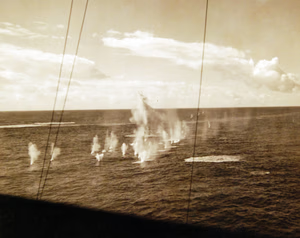
80-G-30302: Operation Torch, November 1942. A U.S. warship lays down a barrage of high explosive shells. The ship, en-route to North Africa, fired after an enemy submarine was reported in the vicinity. Official U.S. Navy Photograph, now in the collections of the National Archives. (2017/06/06).
80-G-30302: Operation Torch, November 1942. A U.S. warship lays down a barrage of high explosive shells. The ship, en-route to North Africa, fired after an enemy submarine was reported in the vicinity. Official U.S. Navy Photograph, now in the collections of the National Archives. (2017/06/06).

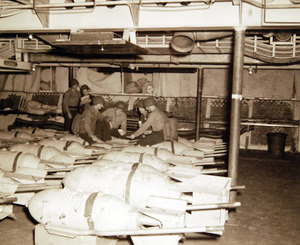
80-G-30263: Operation Torch, November 1942. USS Ranger (CV-4), bombs onboard during the Amphibious Force invasion. Bluejackets are guarding bombs. Standing left to right: Seaman First Class J.B. Williams; Aviation Machinist’s Mate Third Class M.S. Beaker. Seated. Seaman First Class J.A. Bagnera; Aviation Machinist’s Mate M. H. Angrist; Seaman Second Class E.M. Dembrowski; and Seaman Second Class D.G. Dinges. Official U.S. Navy Photograph, now in the collections of the National Archives. (2017/06/06).
80-G-30263: Operation Torch, November 1942. USS Ranger (CV-4), bombs onboard during the Amphibious Force invasion. Bluejackets are guarding bombs. Standing left to right: Seaman First Class J.B. Williams; Aviation Machinist’s Mate Third Class M.S. Beaker. Seated. Seaman First Class J.A. Bagnera; Aviation Machinist’s Mate M. H. Angrist; Seaman Second Class E.M. Dembrowski; and Seaman Second Class D.G. Dinges. Official U.S. Navy Photograph, now in the collections of the National Archives. (2017/06/06).

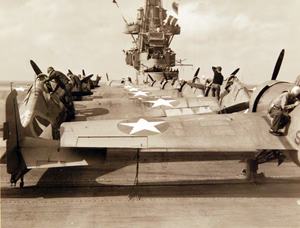
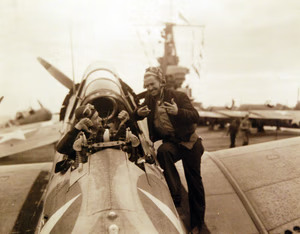
80-G-30281: Operation Torch, November 1942. Planes of USS Ranger (CV-4) en-route to invade French North Africa. Plane captains check over fighters, preparatory to taking off on another raid while the pilots are below being briefed by intelligence officers. Official U.S. Navy Photograph, now in the collections of the National Archives. (2017/06/06).
80-G-30281: Operation Torch, November 1942. Planes of USS Ranger (CV-4) en-route to invade French North Africa. Plane captains check over fighters, preparatory to taking off on another raid while the pilots are below being briefed by intelligence officers. Official U.S. Navy Photograph, now in the collections of the National Archives. (2017/06/06).

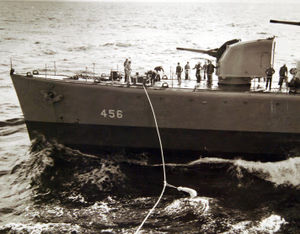
80-G-30255: Operation Torch, November 1942. USS Rodman (DD-456) Official U.S. Navy Photograph, now in the collections of the National Archives. (2017/06/06).
80-G-30255: Operation Torch, November 1942. USS Rodman (DD-456) Official U.S. Navy Photograph, now in the collections of the National Archives. (2017/06/06).

80-G-30247: Operation Torch, November 1942. Planes of USS Ranger (CV-4) en-route to invade French North Africa, November 1942. Aviation Machinist’s Mate 1/C R.M. Price, USNR, offered Aviation Radioman 3/C M.S. Waterson, USN, left $2340 for the latter’s rear seat in a dive bomber but was turned down. Official U.S. Navy Photograph, now in the collections of the National Archives. (2017/06/06).
80-G-30247: Operation Torch, November 1942. Planes of USS Ranger (CV-4) en-route to invade French North Africa, November 1942. Aviation Machinist’s Mate 1/C R.M. Price, USNR, offered Aviation Radioman 3/C M.S. Waterson, USN, left $2340 for the latter’s rear seat in a dive bomber but was turned down. Official U.S. Navy Photograph, now in the collections of the National Archives. (2017/06/06).

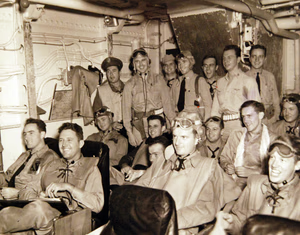
80-G-30253: Operation Torch, November 1942. USS Ranger (CV-4), pilots of Squadron VF-41 laughed and talked with their skipper, Lieutenant Commander C.T. Booth, USN, in the ready room on the morning of the attack on French possession in North Africa. Official U.S. Navy Photograph, now in the collections of the National Archives. (2017/06/06).
80-G-30253: Operation Torch, November 1942. USS Ranger (CV-4), pilots of Squadron VF-41 laughed and talked with their skipper, Lieutenant Commander C.T. Booth, USN, in the ready room on the morning of the attack on French possession in North Africa. Official U.S. Navy Photograph, now in the collections of the National Archives. (2017/06/06).

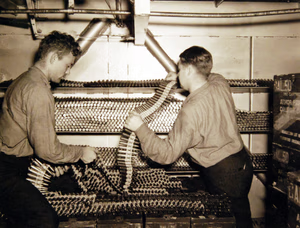
80-G-30234: Operation Torch, November 1942. Activities onboard USS Ranger (CV-4) during the campaign. Shown: Aviation Ordnancemen belted over one million rounds of 50 calibre machine guns ammunition in preparation for the Amphibious Force invasion of French North Africa. Aviation Ordnanceman 2/C C.F. Boyette and Aviation Ordnanceman 2/C J.L. Haddigan, right, stow away a few thousand rounds already belted. Official U.S. Navy Photograph, now in the collections of the National Archives. (2017/06/06).
80-G-30234: Operation Torch, November 1942. Activities onboard USS Ranger (CV-4) during the campaign. Shown: Aviation Ordnancemen belted over one million rounds of 50 calibre machine guns ammunition in preparation for the Amphibious Force invasion of French North Africa. Aviation Ordnanceman 2/C C.F. Boyette and Aviation Ordnanceman 2/C J.L. Haddigan, right, stow away a few thousand rounds already belted. Official U.S. Navy Photograph, now in the collections of the National Archives. (2017/06/06).

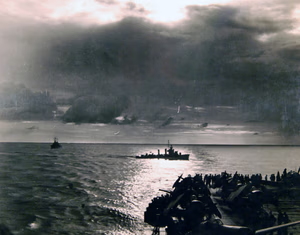
80-G-30232: Operation Torch, November 1942. U.S. destroyer cuts through the wake of a U.S. aircraft carrier on patrol, first day of fighting off North Africa, November 8. Official U.S. Navy Photograph, now in the collections of the National Archives. (2017/06/06).
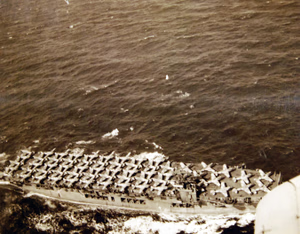
80-G-30232: Operation Torch, November 1942. U.S. destroyer cuts through the wake of a U.S. aircraft carrier on patrol, first day of fighting off North Africa, November 8. Official U.S. Navy Photograph, now in the collections of the National Archives. (2017/06/06).

80-G-30221: Operation Torch, November 1942. USS Chenango (ACV-28) with Army pursuit planes, P-40’s, on the flight deck during the amphibious force invasion of French North Africa. Official U.S. Navy Photograph, now in the collections of the National Archives. (2017/06/06).
80-G-30221: Operation Torch, November 1942. USS Chenango (ACV-28) with Army pursuit planes, P-40’s, on the flight deck during the amphibious force invasion of French North Africa. Official U.S. Navy Photograph, now in the collections of the National Archives. (2017/06/06).

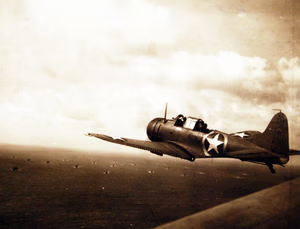
80-G-30218: Operation Torch, November 1942. SBD Dauntless planes from USS Ranger (CV-4) en route to invade French North Africa. A Navy scout bomber flies on anti-submarine patrol. Official U.S. Navy Photograph, now in the collections of the National Archives. (2017/06/06).
80-G-30218: Operation Torch, November 1942. SBD Dauntless planes from USS Ranger (CV-4) en route to invade French North Africa. A Navy scout bomber flies on anti-submarine patrol. Official U.S. Navy Photograph, now in the collections of the National Archives. (2017/06/06).
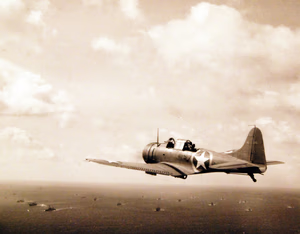
80-G-30216: Operation Torch, November 1942. SBD Dauntless planes from USS Ranger (CV-4) en route to invade French North Africa. A Navy scout bomber flies on anti-submarine patrol. Official U.S. Navy Photograph, now in the collections of the National Archives. (2017/06/06).

80-G-30216: Operation Torch, November 1942. SBD Dauntless planes from USS Ranger (CV-4) en route to invade French North Africa. A Navy scout bomber flies on anti-submarine patrol. Official U.S. Navy Photograph, now in the collections of the National Archives. (2017/06/06).

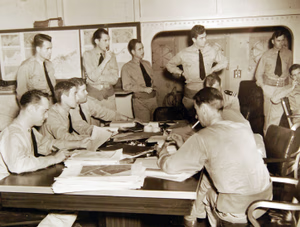
80-G-30210: Operation Torch, November 1942. Squadron commanders and intelligence officers onboard a warship (probably USS Ranger (CV-4) map out air plans for North African operations. Official U.S. Navy Photograph, now in the collections of the National Archives. (2017/06/06).
80-G-30210: Operation Torch, November 1942. Squadron commanders and intelligence officers onboard a warship (probably USS Ranger (CV-4) map out air plans for North African operations. Official U.S. Navy Photograph, now in the collections of the National Archives. (2017/06/06).

80-G-19924: Damaged ships at Casablanca Harbor, Morocco, during the first days of the U.S. campaign in North Africa. French battleship, Jean Bart, is shown damaged. (4/7/2015).
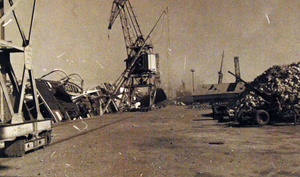
80-G-19924: Damaged ships at Casablanca Harbor, Morocco, during the first days of the U.S. campaign in North Africa. French battleship, Jean Bart, is shown damaged. (4/7/2015).

80-G-19923: Damaged ships at Casablanca Harbor, Morocco, during the first days of the U.S. campaign in North Africa. French ship SS Porthos is shown damaged. (4/7/2015).
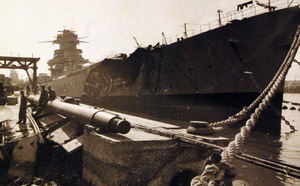
80-G-19923: Damaged ships at Casablanca Harbor, Morocco, during the first days of the U.S. campaign in North Africa. French ship SS Porthos is shown damaged. (4/7/2015).

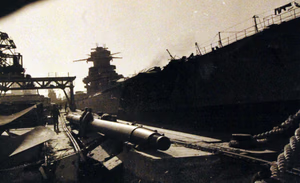
80-G-19918: Damaged ships at Casablanca Harbor, Morocco, during the first days of the U.S. campaign in North Africa. French battleship, Jean Bart, is shown damaged. (4/7/2015).
80-G-19918: Damaged ships at Casablanca Harbor, Morocco, during the first days of the U.S. campaign in North Africa. French battleship, Jean Bart, is shown damaged. (4/7/2015).

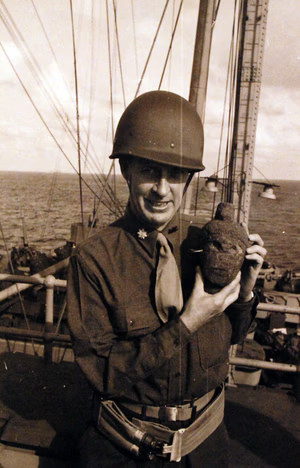
80-G-19889: U.S. Army personnel on a transport during the first part of the U.S. campaign in North Africa. U.S. Army Major is holding a carved stone head. (4/7/2015).
80-G-19889: U.S. Army personnel on a transport during the first part of the U.S. campaign in North Africa. U.S. Army Major is holding a carved stone head. (4/7/2015).

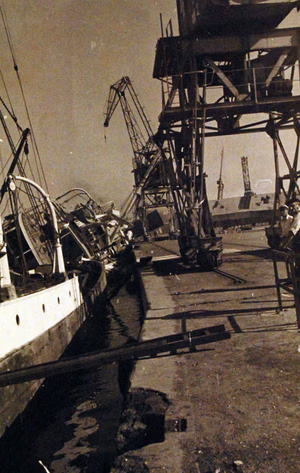
80-G-19921: Damaged ships at Casablanca Harbor, Morocco, during the first days of the U.S. campaign in North Africa. French ship SS Porthos is shown damaged. (4/7/2015).
80-G-19921: Damaged ships at Casablanca Harbor, Morocco, during the first days of the U.S. campaign in North Africa. French ship SS Porthos is shown damaged. (4/7/2015).

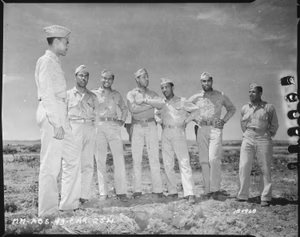
"Staff officers of an...Air Corp Squadron near Fez, French Morocco. Left to right, Lt. Col. Benjamin O. Davis, C.O., Cap   NARA   531174

"Staff officers of an...Air Corp Squadron near Fez, French Morocco. Left to right, Lt. Col. Benjamin O. Davis, C.O., Cap NARA 531174
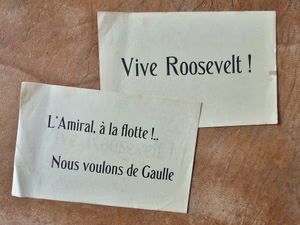
After the success of the Allied landing of 8/11/1942, the Americans preferred to keep in place, hoping to rally it, the entire (opposing) Vichy civil and military administration, which was to arrest and intern until 1943 the resistance fighters then without protection, ulcerated and rebels, who launched these butterflies on the military parade of the Allies in liberated Algiers, rue d'Isly, at the end of November 1942.

After the success of the Allied landing of 8/11/1942, the Americans preferred to keep in place, hoping to rally it, the entire (opposing) Vichy civil and military administration, which was to arrest and intern until 1943 the resistance fighters then without protection, ulcerated and rebels, who launched these butterflies on the military parade of the Allies in liberated Algiers, rue d'Isly, at the end of November 1942.